Apricot Glazed Salmon
There is something about glossy, golden salmon coated in a sweet apricot glaze that makes an ordinary dinner feel special. Apricot Glazed Salmon brings together flaky salmon, fruity preserves, savory soy sauce, fresh garlic, honey, and a little lemon for a glaze that is sticky, bright, and beautifully balanced. Even better, it comes together without a complicated list of ingredients or a long cooking process.
The glaze is the real star here. As it cooks, the apricot preserves turn warm and glossy, while the honey helps it caramelize around the salmon. A splash of lemon keeps the sweetness from becoming too heavy, and soy sauce adds just enough savory depth.
If you love easy salmon dinners that look impressive without requiring much fuss, this is one to save. Serve it with fluffy rice and roasted vegetables, or keep it simple with a fresh salad for a lighter meal.
Why You’ll Love This Apricot Glazed Salmon

Apricot Glazed Salmon is the kind of dinner that feels a little fancier than the effort it actually takes. The salmon stays tender and flaky while the glaze creates a shiny, flavorful coating over the top.
The flavor has a little bit of everything. Apricot preserves bring fruity sweetness, honey adds richness, soy sauce gives the glaze a savory edge, and lemon juice adds the bright tang that ties it all together. Garlic rounds out the sauce with a warm, savory note.
It is also wonderfully flexible. Make it for a simple weeknight dinner, serve it with rice and vegetables for a complete meal, or dress it up with fresh herbs when you’re having guests.
Apricot Glazed Salmon at a Glance
- Flavor: Sweet, tangy, savory, and lightly garlicky
- Main ingredient: Salmon fillets
- Cooking method: Sear and bake
- Best for: Easy weeknight dinners and simple entertaining
- Serving idea: Rice, roasted vegetables, asparagus, or a fresh salad
Ingredients You’ll Need
The ingredient list is simple, but each part of the glaze brings something important to the final flavor.
Salmon
Use fresh salmon fillets with a similar thickness so they cook evenly. Skin-on fillets work well if you enjoy crisp skin, while skinless fillets make serving especially easy.
Pat the salmon dry before seasoning. This helps it sear nicely instead of releasing excess moisture into the pan.
Apricot Preserves
Apricot preserves create the fruity base of the glaze. They become glossy and slightly sticky as they cook, giving the salmon its signature sweet coating.
If you don’t have apricot preserves, peach preserves can work as a close alternative. Orange marmalade can also bring a brighter citrus flavor, although the finished glaze will taste slightly different.
Soy Sauce
Soy sauce balances the sweetness with salty, savory flavor. Use low-sodium soy sauce if you prefer more control over the seasoning.
Honey
A little honey deepens the sweetness and helps the glaze become beautifully glossy as it cooks.
Lemon Juice
Fresh lemon juice adds acidity and keeps the glaze tasting bright rather than overly sweet.
Garlic
Fresh minced garlic adds savory depth and works especially well with the fruity apricot flavor.
Olive Oil, Salt and Black Pepper
Olive oil helps sear the salmon, while salt and pepper season the fish before the glaze goes on.
How to Make Apricot Glazed Salmon
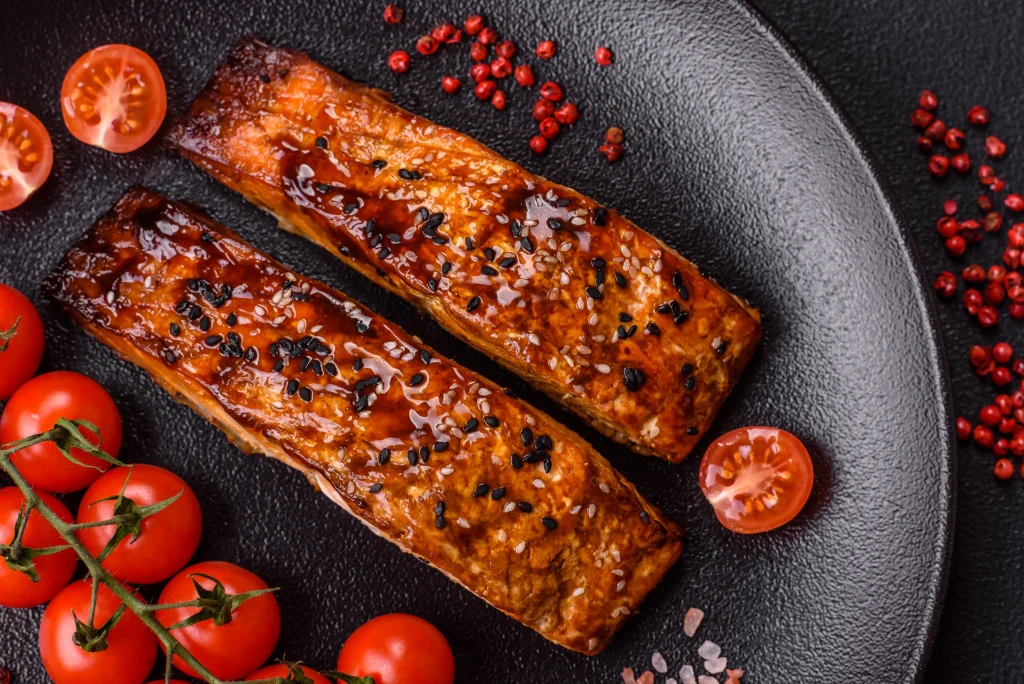
The process is straightforward, but a few small details make a noticeable difference. Keep an eye on the glaze toward the end because the sugars can caramelize quickly.
Make the Apricot Glaze
Add the apricot preserves, soy sauce, honey, lemon juice, and minced garlic to a small bowl. Stir until everything is smooth and evenly combined.
The glaze should be thick enough to coat the salmon but still easy to brush or spoon over the surface. If your preserves are particularly thick, let them sit at room temperature for a few minutes before mixing.
Taste the glaze before adding it to the fish. If it feels too sweet, a little extra lemon can brighten it. If you prefer a deeper savory flavor, add a small splash of soy sauce.
Prepare the Salmon
Preheat the oven to 375°F (190°C).
Pat the salmon fillets dry with paper towels, then season both sides lightly with salt and black pepper.
Heat olive oil in a large oven-safe skillet over medium-high heat. Once the pan is hot, place the salmon in the skillet, skin side down if using skin-on fillets.
Let it cook undisturbed for about 4 to 5 minutes, until the surface is nicely browned and the salmon releases easily from the pan.
Glaze and Bake
Brush the apricot mixture generously over the salmon, making sure the glaze reaches the top and sides of each fillet.
Transfer the skillet to the preheated oven and bake for about 10 to 12 minutes, depending on the thickness of the salmon.
The glaze will become warmer and glossier as it cooks, while the salmon turns tender and flaky in the center.
For an extra caramelized finish, switch to the broiler for the final 1 to 2 minutes. Watch it closely. The sugars in the apricot glaze can go from beautifully caramelized to overly dark very quickly.
How to Know When Salmon Is Done
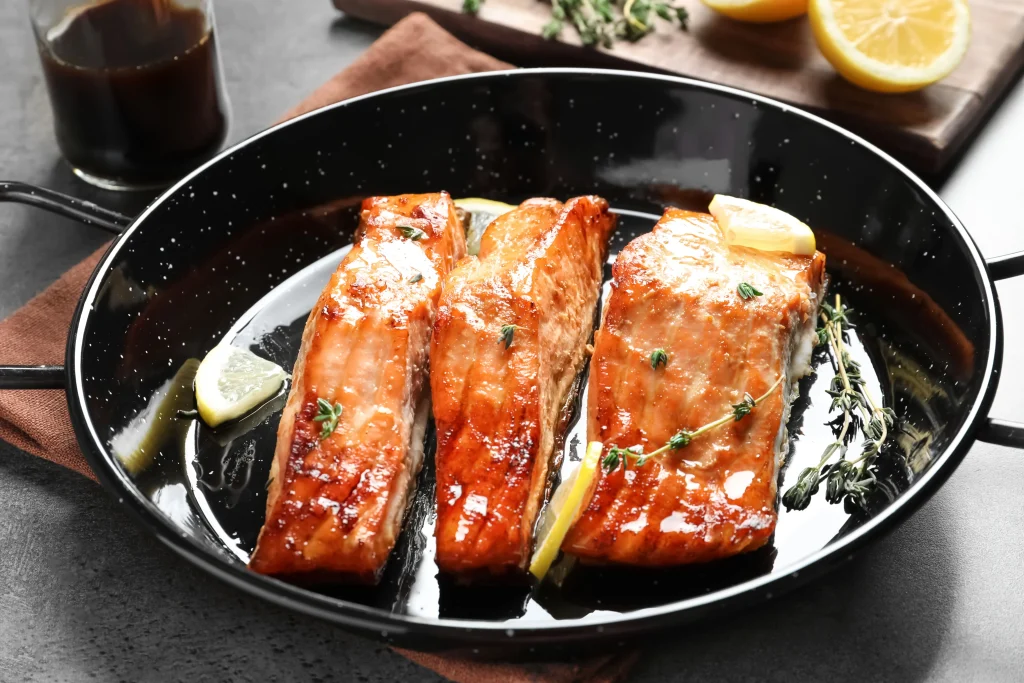
The exact cooking time depends on the thickness of your fillets, so don’t rely on the clock alone.
The salmon should look opaque through the center and flake easily when gently pressed with a fork. For the most reliable check, use an instant-read thermometer in the thickest part of the fillet.
The USDA recommends cooking fish to 145°F (63°C) internally. Once cooked, let the salmon rest briefly before serving so the juices settle and the glaze stays nicely coated over the top.
Tips for the Best Apricot Glazed Salmon
A few simple details can make the finished dish noticeably better:
- Dry the salmon first. Excess moisture can prevent proper browning.
- Don’t move the salmon too soon. Letting it sear undisturbed helps create a golden surface.
- Taste the glaze before cooking. Adjust the lemon or soy sauce if needed.
- Don’t overcook the fish. Start checking early if your fillets are thinner.
- Watch the broiler closely. The apricot and honey sugars caramelize quickly.
- Use similar-sized fillets. They are more likely to finish cooking at the same time.
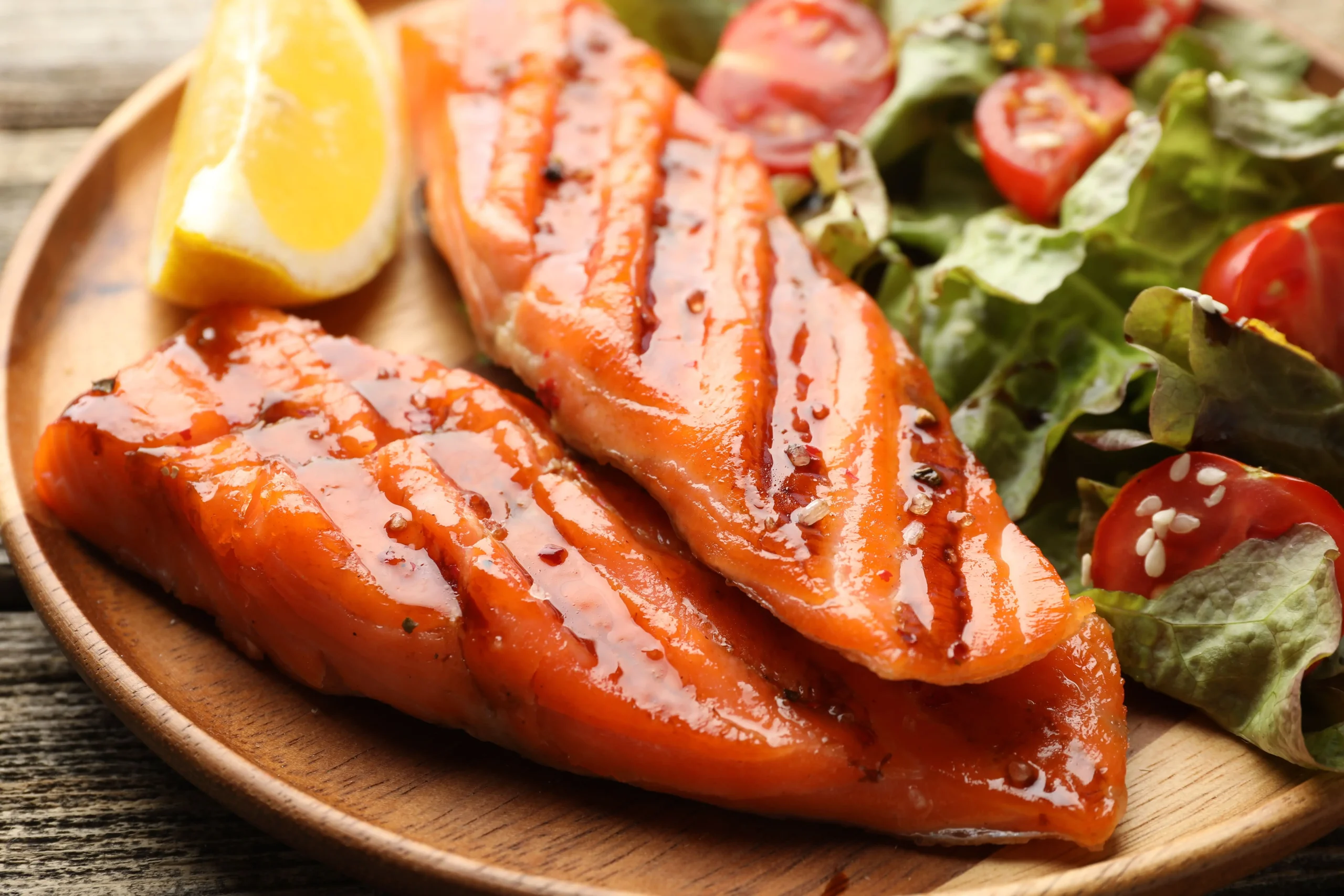
The finished salmon should have a tender center with a glossy, sticky layer of apricot glaze over the top. That contrast between flaky fish and caramelized sauce is what makes this simple dinner so satisfying.
What to Serve With Apricot Glazed Salmon
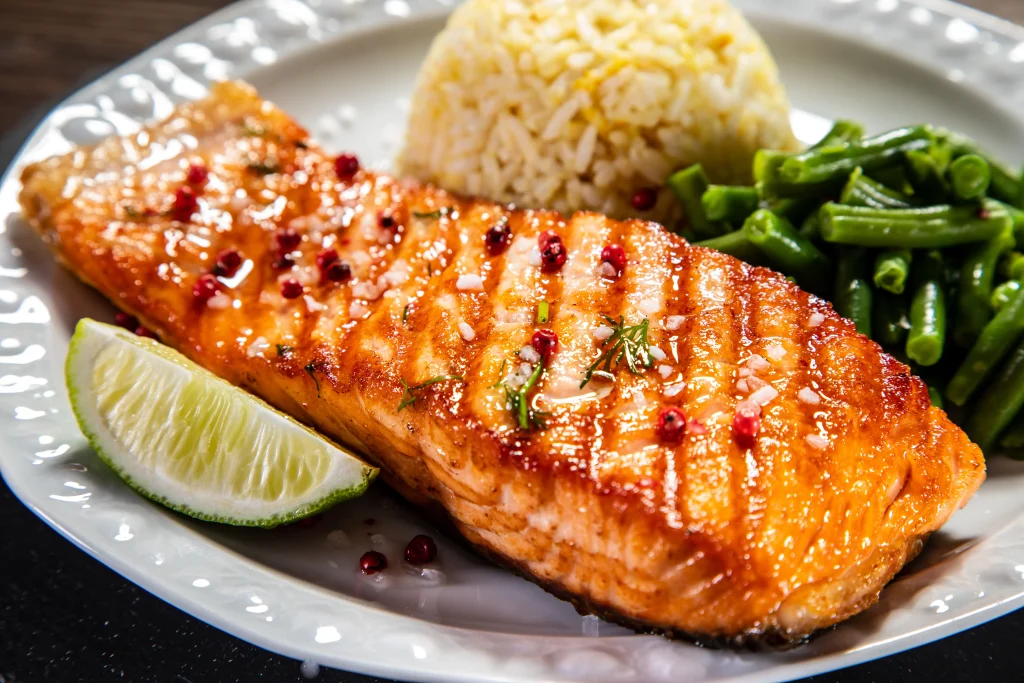
The sweet, tangy glaze pairs especially well with simple sides that don’t compete with the salmon. Fluffy rice is an easy choice because it soaks up every bit of the extra sauce. Brown rice also adds a slightly nutty contrast.
For vegetables, try roasted asparagus, broccoli, green beans, or cabbage. A crisp salad works beautifully when you want something lighter, while roasted potatoes make the meal feel a little heartier.
If you’re serving Apricot Glazed Salmon for guests, add fresh parsley or cilantro over the top just before serving. The fresh herbs bring a pop of color and a bright finish against the glossy glaze.
Easy Variations and Substitutions

There is plenty of room to make this salmon recipe your own without changing its basic character.
Swap the Apricot Preserves
Peach preserves make one of the closest substitutions because they have a similarly soft, fruity sweetness. Orange marmalade works too, although it gives the glaze a more pronounced citrus flavor.
Mango preserves or chutney can also work if you want something a little more tropical. Keep in mind that different preserves vary in sweetness, so taste the glaze before cooking and adjust the lemon juice if needed.
Add a Little Heat
If you like sweet-and-spicy flavors, add a pinch of red pepper flakes to the glaze. You could also use a small amount of cayenne for more noticeable heat.
The gentle sweetness of the apricot works particularly well with a little spice.
Use Another Fish
The glaze isn’t limited to salmon. Trout or another firm fish can work as well, although the cooking time will depend on the thickness of the fillets.
For the best texture, start checking thinner fish earlier rather than following the salmon cooking time exactly.
How to Store and Reheat Leftover Salmon
Let leftover salmon cool briefly, then transfer it to an airtight container and refrigerate it promptly. Cooked salmon is best enjoyed within 3 days when properly refrigerated.
When reheating, use gentle heat so the fish doesn’t become dry. Warm it in a covered oven-safe dish at a low temperature until heated through, or reheat it gently in a skillet with a splash of water.
If you know you’ll have leftovers, keep the salmon slightly away from direct high heat when reheating. The apricot glaze contains sugar, so it can darken quickly.
Apricot Glazed Salmon
Ingredients
Method
- Pat the salmon dry and season both sides with salt and black pepper.
- In a small bowl, stir together the apricot preserves, soy sauce, honey, lemon juice, and garlic.
- Heat olive oil in an oven-safe skillet over medium-high heat. Sear salmon.
- Brush the apricot glaze generously over the salmon and bake.
- Check the thickest part of the salmon for doneness, then rest briefly before serving.
Frequently Asked Questions
Can I use frozen salmon for this recipe?
Yes. Thaw frozen salmon completely in the refrigerator before cooking, then pat the fillets very dry with paper towels. Removing excess moisture helps the salmon brown properly and allows the apricot glaze to cling to the surface instead of becoming watery.
Can I use skin-on salmon?
Absolutely. Skin-on salmon works well for this recipe and can develop a nicely browned, crisp surface when seared in a hot skillet. If you prefer skinless salmon, you can use it too. Just keep an eye on the cooking time because thinner fillets may cook faster.
Can I substitute apricot preserves?
Yes. Peach preserves are the closest simple substitute and keep the glaze fruity and sweet. Orange marmalade gives you a brighter citrus flavor, while mango preserves create a more tropical version. Since preserves vary in sweetness, taste the glaze and adjust the lemon juice when necessary.
How do I know when salmon is cooked?
The thickest part should look opaque and flake easily when gently pressed with a fork. For the most accurate check, use an instant-read thermometer in the center of the thickest fillet. The USDA recommends an internal temperature of 145°F (63°C) for fish.
Can I make the apricot glaze ahead of time?
Yes. You can mix the glaze ahead and keep it covered in the refrigerator until you’re ready to cook. Give it a good stir before using it. If it becomes very thick after chilling, let it sit briefly at room temperature so it spreads more easily over the salmon.
What can I serve with apricot glazed salmon?
Rice, roasted vegetables, asparagus, broccoli, cabbage, potatoes, and fresh salads all pair nicely with the sweet and savory glaze. For a simple weeknight dinner, fluffy rice and one roasted vegetable are enough to turn the salmon into a complete meal.
Final Thoughts
A good salmon dinner doesn’t need a complicated sauce or a long ingredient list. Apricot Glazed Salmon gets its character from a handful of ingredients that come together beautifully: fruity apricot preserves, savory soy sauce, honey, lemon, and garlic.
The finished salmon is tender and flaky, with a glossy glaze that turns lightly caramelized around the edges. Serve it over rice with roasted vegetables for an easy dinner, or add fresh herbs and a bright salad when you’re making it for guests.
If this recipe caught your eye on Pinterest, save it somewhere you’ll find it later. It is the kind of dinner worth keeping in your regular rotation when you want something simple that still feels special.